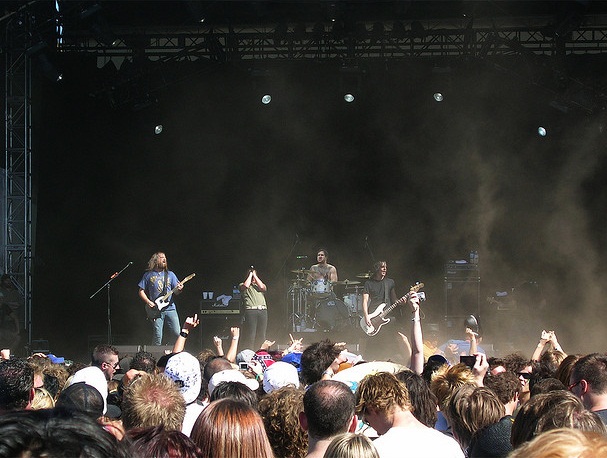
Red Jumpsuit Apparatus Frontman Ronnie Winter: Unpacking a Bold Political Stand
In an era where the lines between art and activism are increasingly blurred, Ronnie Winter, the charismatic frontman of the post-hardcore band The Red Jumpsuit Apparatus, has once again thrust himself and his band into the heart of a heated political debate. With a declaration as unequivocal as it was unsparing, Winter publicly reaffirmed his staunch opposition to fans who supported Donald J. Trump in the 2024 U.S. Presidential election, issuing a clear message: Christian Trump voters are not welcome at their shows.
This isn't the first time Winter has used his platform to advocate for sociopolitical issues. His recent statement, delivered via a video posted on both his personal and the band’s official Instagram accounts on June 14th, 2024, serves as a powerful extension of The Red Jumpsuit Apparatus’s previous "Stay Woke" campaign from 2020. The video quickly went viral, igniting a fervent discussion among fans, critics, and casual observers alike, underscoring the enduring tension between artistic expression, political conviction, and audience engagement.
The Unwavering Stance: Winter's 2024 Message and "Stay Woke" Legacy
Ronnie Winter's June 14th video left no room for ambiguity. Addressing his audience directly, he reminded them of his past statements from 2020, emphasizing that his "Stay Woke" position had not only remained consistent but had been further validated by subsequent events. "Look man, the thing about being woke is you’re awake," Winter articulated. "And once you’re awake, you can never go to sleep. And not only has nothing changed, but everything they said was going to happen — the woke people — has happened. You have done nothing but prove them right."
He then proceeded with a direct challenge to Christian Trump voters: "Hi, I’m Ronnie Winter. I sing for The Red Jumpsuit Apparatus, and I actually follow what Jesus says. If you’re a Christian and you’re watching this and you voted for Donald Trump, shame on you." The message culminated in a definitive exclusion: "You are not allowed to come to my shows. I don’t want you there. Don’t come to my shows. It’s awesome that you love ‘Face Down.’ It’s not for you. It’s not your song." Winter even offered refunds and extended the ban indefinitely, declaring, "Forever, don’t come. Goodbye."
This powerful statement places Winter and The Red Jumpsuit Apparatus firmly in the camp of artists willing to take explicit and potentially polarizing political stands, regardless of the commercial implications. It's a move that resonates with a growing trend of musicians and public figures leveraging their platforms to advocate for their beliefs, often at the risk of alienating a segment of their fanbase. The "Stay Woke" philosophy, for Winter, is not a fleeting trend but an awakened state of awareness that demands consistent adherence to principles, which he explicitly links to his interpretation of Christian teachings.
For a deeper dive into the immediate reactions and broader implications of Winter's outspokenness, you can read more about Ronnie Winter's Anti-Trump Stance: RJA Frontman Sparks Debate.
Faith, Politics, and "Face Down": Deconstructing the Controversy
One of the most provocative elements of Ronnie Winter's declaration was his invocation of Christian faith as the basis for his political stance. By stating, "I actually follow what Jesus says," he positioned his opposition to Trump voters as a matter of religious conviction, rather than mere political preference. This approach introduces a complex layer to the debate, challenging the often-assumed alignment between evangelical Christianity and conservative political movements, particularly in the context of the American political landscape.
The explicit rejection of fans who love "Face Down" – arguably the band's most iconic song, known for its powerful message against domestic violence and abuse – further amplified the controversy. Winter's assertion that "It’s not for you. It’s not your song" suggests a profound belief that the song's meaning and intent are incompatible with the values he perceives in Trump's supporters. This raises fundamental questions about artistic ownership and the interpretation of art. Can an artist truly revoke a song from an audience, even if that audience finds personal resonance in its message? Winter's stance argues that the core values embedded in the art are inseparable from the values of the artist, and therefore, from the audience that truly understands and appreciates it.
This decision prompts fans to confront the uncomfortable reality that their political affiliations might, in the artist's view, disqualify them from fully appreciating or even experiencing the art they love. It's a bold move that forces introspection on both sides: fans are challenged to examine their alignment with the artist's expressed values, while artists are tested on the strength of their convictions against potential commercial backlash.
The Artist's Platform: Navigating Expression in a Divided World
Ronnie Winter's explicit political stand is not an isolated incident but part of a larger cultural phenomenon where artists are increasingly using their platforms to voice strong opinions on social and political issues. From protest songs of the 1960s to contemporary social media activism, musicians have historically been at the forefront of cultural change. However, the direct, personal exclusion of a segment of their audience, as articulated by Winter, represents a particularly assertive form of artist activism.
There are several reasons why artists might choose to take such a definitive stance:
- Authenticity and Integrity: For many, remaining silent on issues they deem morally critical would be a betrayal of their own values and artistic integrity. Winter's reference to being "awake" suggests a moral imperative to speak out.
- Audience Alignment: By taking a strong stand, artists can solidify their connection with fans who share their values, creating a more dedicated and engaged community, even if it means losing others.
- Driving Conversation: Controversial statements, while divisive, undeniably spark conversation and draw attention to the issues at hand, prompting wider public debate.
- Personal Conviction: Ultimately, an artist's platform is an extension of their individual beliefs. For someone like Winter, whose faith informs his worldview, his public statements are a natural outgrowth of his convictions.
However, such declarations come with inherent risks. Alienating a portion of the fanbase can lead to reduced album sales, lower concert attendance, and negative media attention. Yet, for artists like Ronnie Winter, the potential costs seem to be outweighed by the perceived necessity of speaking truth to power and standing firm on deeply held principles. It serves as a stark reminder that while music can be a universal language, the individuals creating it often have very specific messages they wish to convey, and they are increasingly unafraid to do so.
For any artist contemplating such a public stand, a critical tip would be to understand the depth of their own conviction and be prepared for the consequences, both positive and negative. Authenticity resonates, but so does controversy.
Beyond the Mic: Ronnie Winter's Musical Foundation
While often recognized for his powerful vocals and songwriting, particularly within the emo and post-hardcore genres, Ronnie Winter's musical foundation is deeply rooted, reflecting a journey spanning decades. This seasoned musicality underpins his authoritative presence, both on stage and in his recent political declarations. His experience as a guitarist and singer has been cultivated through extensive professional work in various music scenes, allowing him to absorb and emulate a diverse range of styles.
Winter's playing and vocal techniques often draw parallels to legendary figures such as Pete Townshend (The Who) for his raw energy, David Gilmour (Pink Floyd) for his melodic sensibility, and Alex Lifeson (Rush) for his intricate textures. Beyond instrumental prowess, his songwriting and pop/rock sensibilities evoke the intelligent and emotionally resonant work of bands like Radiohead, the intricate arrangements of Dada, the timeless melodies of The Beatles, and the raw charm of The Replacements ("The 'Mats"). This rich tapestry of influences speaks to a profound understanding of music theory and composition, equipping him with the tools to craft impactful songs like "Face Down" that resonate deeply with listeners.
This extensive musical background isn't just about technical skill; it informs the depth and sincerity of his artistic output, providing a robust platform for his outspoken commentary. His ability to weave complex narratives and emotions into his music gives his words, whether sung or spoken, a unique weight and credibility. This comprehensive musical journey has undoubtedly shaped not only his sound but also his worldview, lending a deeper context to his public persona and convictions.
To explore more about the journey of artists drawing from such foundational influences, consider reading Ronnie Winters: Guitarist's Journey from Townshend to Radiohead.
Conclusion
Ronnie Winter's explicit political stand has undeniably marked a significant moment for The Red Jumpsuit Apparatus and the broader music community. By directly challenging Christian Trump voters and declaring their unwelcomeness at his shows, Winter has not only reaffirmed his unwavering "Stay Woke" position but has also ignited a crucial conversation about the intersection of faith, politics, and artistic expression. His insistence that certain values are antithetical to the very spirit of his music, exemplified by his claim that "Face Down" is "not your song" for those voters, represents a bold assertion of an artist's moral authority.
As political tensions continue to permeate every aspect of culture, artists like Winter are increasingly navigating the complex terrain of public advocacy. While such definitive stances inevitably alienate some, they also strengthen bonds with others, forging communities united by shared values. Ronnie Winter's declaration serves as a potent reminder that for some artists, silence is not an option, and the stage is as much a pulpit for conviction as it is a platform for performance.